
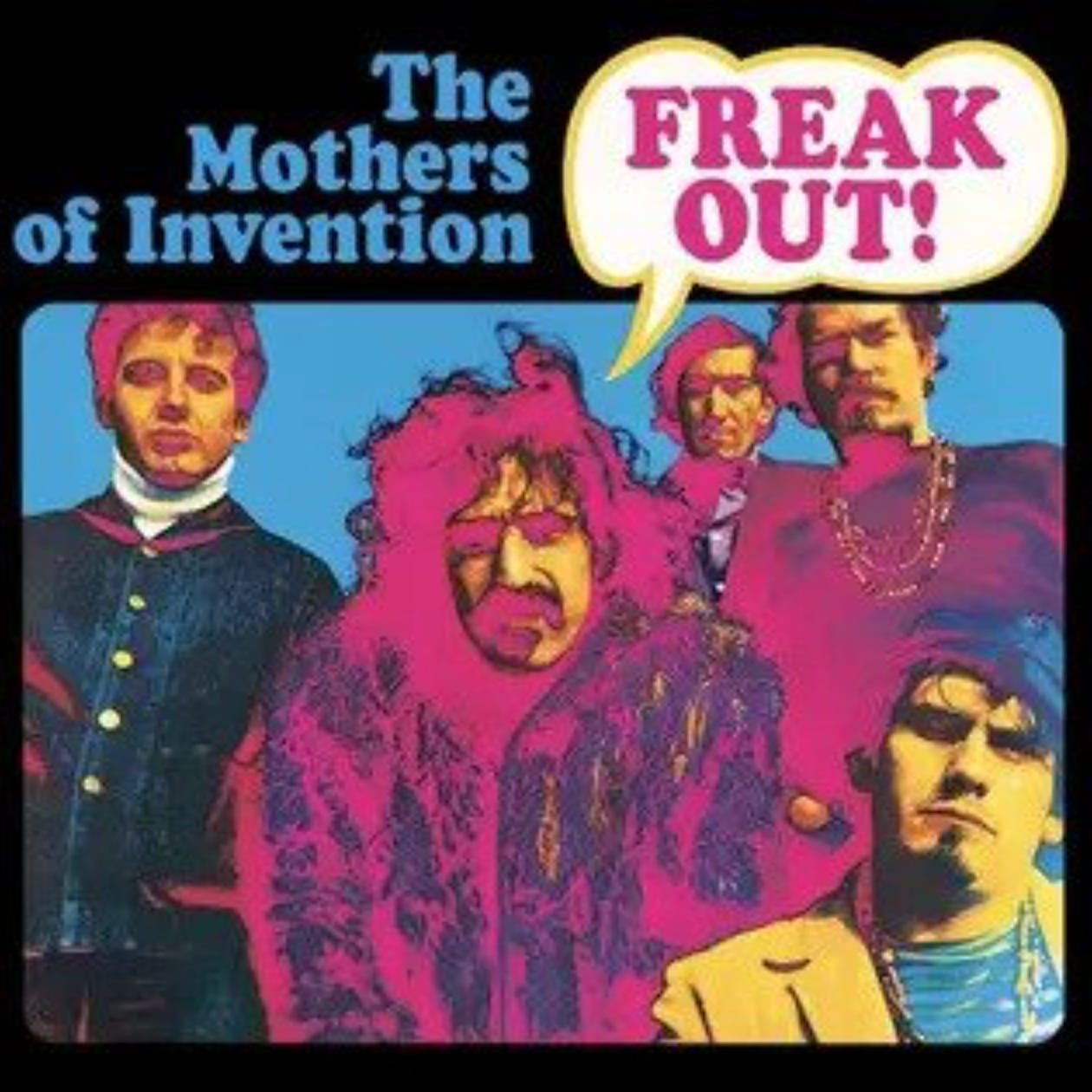
Freak Out!
When it's time to panic

When is it time to panic? The answer is simple. It’s time to panic when the act of panicking works to prevent the thing that you were worrying about. Here are some examples:
After Trump announced his “Liberation Day” tariffs, the markets panicked. Trump’s advisors realized that they had made a serious error and persuaded Trump to back off.
After Trump hinted that he would appoint Kevin Hassett to be the new Fed chair, people were appalled. There was so much pushback that it became clear that Hassett might have difficulty getting approved. Trump backed off.
After Trump threatened to take Greenland from Denmark, there was so much criticism from both our allies in Europe and key figures in Congress that Trump was forced to back off and leave Greenland alone.
After Trump sent ICE agents into America’s bluest cities with instructions to get tough, the public became so outraged that Trump was forced to back off, ICE agents were moved to less volatile places, and Kristi Noem was fired.
How should we think about these “TACO” events? Some people argue that Trump’s critics overreacted, and that his retreats show that the danger was never as great as advertised. His initial move was merely an opening gambit, a negotiating tactic.
In fact, there is very little evidence for this benign view of the situation. Instead, all the evidence points to the conclusion that Trump would have carried through with his plans if the opposition had not “panicked”. In some cases, panic is a good thing.
The real problem is that there has recently been far too little panic. People did not freak out when the Trump administration ordered the US military to begin murdering Venezuelan civilians on small boats in the Caribbean. Because there was no widespread panic, the murders have continued.
There was also very little panic when businessmen and foreign governments paid bribes of hundreds of millions of dollars in exchange for favors from the Trump administration. As a result, the bribes have continued.
There was also very little panic when Trump began pardoning criminals solely because they supported him. As a result, the pardons of thugs that assault police officers, big drug kingpins, and Medicare fraudsters have continued.
Panic can come from many sources. In some cases, the financial markets will panic. In other cases, congressional leaders might panic. Or our allies might panic. Or the voters might panic.
A few weeks ago, I saw something I never expected to see—a large anti-Trump protest in conservative Mission Viejo. The target of their ire was the recent killings by Border Patrol agent Jesus Ochoa and Customs and Border Protection officer Raymundo Gutierrez. (Recall when Trump argued that Mexico was sending us their murderers.) It seems like the public is increasingly panicking about ICE overreach. Voters in conservative Fort Worth also seem to be panicking.
Sophisticated skeptics often tell us that people exaggerated the risk that Trump would abolish democracy and become a dictator. That’s true, they did exaggerate the risk.
But these pundits miss the more important point. Trump failed to achieve his goal precisely because people overreacted. A “hysterical” reaction can be a good thing. It was the reaction of investors, politicians, allies and voters that stopped Trump from following through with his instincts.
Trump’s worst instincts are not “negotiating positions”. He really did endorse China’s policy of putting a million Uyghurs into concentration camps. He really did endorse Duterte’s policy of murdering drug suspects. He really does respect Putin more than Zelenskyy. He really did support using force to take Greenland from Denmark. When people panic, Trump is stopped. When there isn’t enough panic, Trump indulges in his worst instincts.
The people that panicked should be proud when their worst fears fail to materialize. That means they’ve done their job. The real TDSers are the people who go to bed at night firmly opposed to neoconservative projects to engage in regime change and wake up the next day sounding more hawkish than John Bolton, all because Trump was depressed by low poll numbers and felt a need to “do something”.
PS. Hundreds of millions of years of evolution have produced creatures that panic in certain situations. Are we somehow to believe that panic is not an appropriate response to any type of danger? If so, why didn’t evolution cause panicking creatures to lose out in the long struggle of “the survival of the fittest”?
PPS. I see a similar problem in macroeconomics. In 1994, the Fed raised interest rates to prevent an upsurge in inflation, and the inflation did not materialize. People accused the Fed of overreacting, which is odd given that the outcome is exactly what the Fed wanted. In recent years, some have argued the Fed raised rates too high in 2023 because inflation is “coming down on its own.” Here’s a tip, in all of human history, inflation has never once moved “on its own”.
"Trump is the one guy with an actual shot at becoming president who dissents from Washington’s long-standing, pointless war agenda”
They really nailed that one, huh.
You could do a lot worse summing up the present moment than “Hungry Freaks, Daddy,” “Trouble Every Day,” and “It Can’t Happen Here,” that’s for sure.