
Peak cinema
Plus some thoughts on whether history actually happened

Over time, I’ve noticed that an unusual number of important films came out in the late 1950s and early 1960s. In this post, I’ll argue that the period from 1958 to 1963 is the artistic peak of filmmaking. So what is the evidence for this claim? I certainly won’t argue that the films discussed below are the most popular among the general public. Rather this period is especially important for serious film buffs. [I’ll conclude this post with an a contrary view.]
In contrast to the general public, film buffs see a close correlation between “great films” and “films made by great directors.” And almost any list of the greatest directors of all time is going to be dominated by people who did much of their best work around 1960. For instance, in one list of the 250 greatest directors of all time, 11 of the top 13 directors were doing important work around 1960. (The other two were Coppola and Scorsese.) But why 1960? It’s not nostalgia on my part; I was too young to see these films when they came out. And note that the 1958-63 period of great films immediately preceded the golden age of pop music (roughly 1964-69.)
I suspect that this golden age of film reflects the convergence of two factors. The classic style of filmmaking reached a certain level of perfection during this period, especially in Hollywood. At the same time, a new avant-garde style of filmmaking was being developed in Europe. The best work of craftsmen like Alfred Hitchcock and John Ford and David Lean was being produced late in their careers, just as the best work of conceptual artists like Godard, Truffaut and Antonioni was coming out relatively early in their careers.
This pattern may be related to something noticed by David Galenson:
Experimental innovators, like Cézanne, work by trial and error, and arrive at their most important contributions gradually. In contrast, Picasso and other conceptual innovators make sudden breakthroughs by formulating new ideas. Consequently, experimental innovators usually make their discoveries late in their lives, whereas conceptual innovators typically peak at an early age.
Their most expensive paintings tended to be produced in the early 1900s, when Cezanne was old and Picasso was young:

In the lists below, I’ve arranged the films by country, and then by director. The bolded films are especially notable, although not necessarily better than those that are not bolded. I’ve seen most of these films, but not all. A few were included solely based on their reputation.
It was hard to decide where to draw the line. Initially, I wanted to include just 5 years. But I couldn’t imagine excluding either Vertigo or 8 1/2, so I had to extend to 6 years. But Wild Strawberries and The Seventh Seal came out in 1957. In the end, you must draw the line somewhere. This meant that Kubrick and Bergman had the bad luck of seeing some of their great masterpieces lie just outside the range. (They are #2 and #3 on that list of all-time great directors, just behind Hitchcock.)
American films: In my view, the US, France and Japan have the three most distinguished film industries. Over the past 125 years, Hollywood has produced the largest number of great films, but during the 1958-63 period France and Japan (and perhaps Italy) were roughly comparable. When you look at the list of American directors, Hitchcock and Wilder stand out in the sense that 1958-63 was when they did their best work. Vertigo is my favorite film from this period, from any country.
Alfred Hitchcock: Vertigo, North by Northwest, Psycho, The Birds

John Ford: The Man Who Shot Liberty Valance, How the West Was Won, Sergeant Rutledge, The Horse Soldiers
Orson Welles: Touch of Evil, The Trial
Howard Hawks: Rio Bravo
Stanley Kubrick: Lolita, Spartacus
Billy Wilder: Some Like It Hot, The Apartment, Irma la Douce
Anthony Mann: Man of the West
John Huston: The Misfits
French films: As far as French films, this was obviously the heart of the New Wave, when Godard, Truffaut, Resnais and Malle produce much of their best work. Melville and Tati produced their best films a bit later in the 1960s.
Louis Malle: Elevator to the Gallows, The Fire Within, The Lovers, Zazie in the Metro
Truffaut: Jules and Jim, The 400 Blows, Shoot the Piano Player
Bresson: Pickpocket, The Trial of Joan of Arc
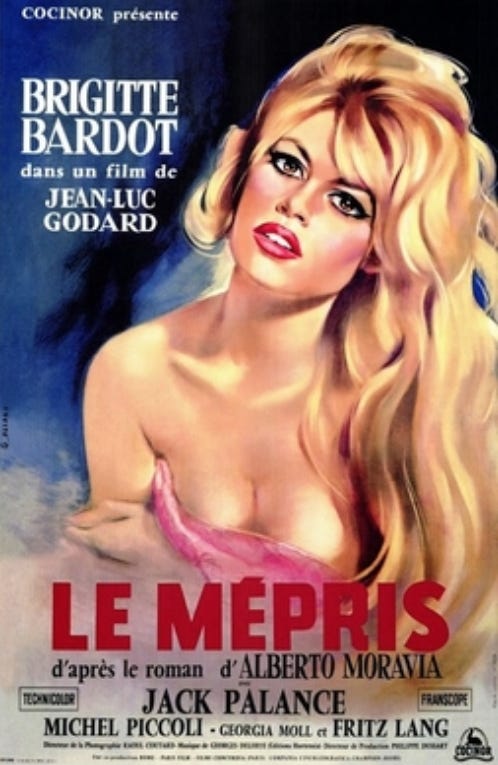
Godard: Breathless, Contempt, A Woman is a Woman, Vivre Sa Vie
Resnais: Last year at Marienbad, Hiroshima Mon Amour, Muriel
Melville: Le Doulos, Léon Morin—Priest, Magnet of Doom, Two Men in Manhattan
Agnes Varda: Cléo from 5 to 7
Tati: Mon Oncle
Rene Clement: Purple Noon
Japanese films: In general, I prefer Japanese films to French films. But Japan’s best period came a bit earlier, say around the first half of the 1950s. That earlier period featured an amazing run of masterpieces, including Rashomon, The Seven Samurai, Late Spring, Tokyo Story, Ugetsu, Sansho the Baliff, and Floating Clouds. The list below still contains a lot of great films, but not quite the high points you’d have seen from a list focused on the early 1950s.
Akiru Kurusawa: High and Low, Yojimbo, Sanjuro, The Hidden Fortress,
Ozu: The End of Summer, Equinox Flower, Floating Weeds, Late Autumn, An Autumn Afternoon, Good Morning
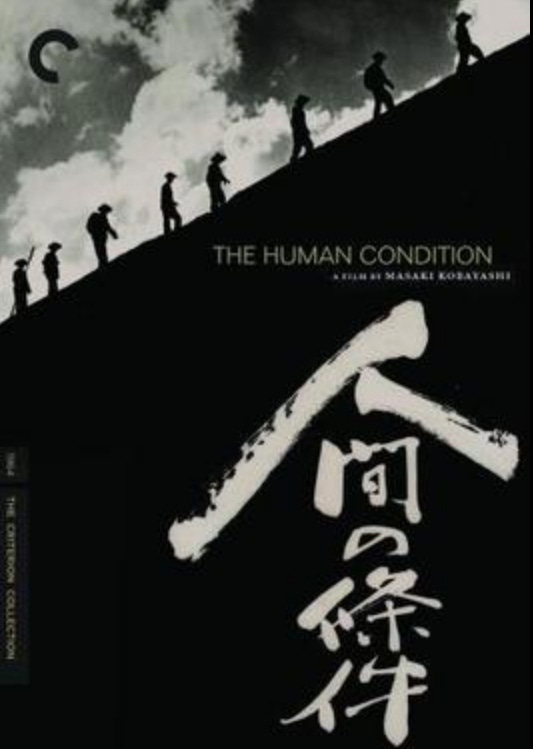
Masaki Kobayashi: The Human Condition: Parts I, II and III, Harakiri
Naruse: When a Woman Ascends the Stairs, Autumn Has Already Started, and nine other films!
Imamura: Pigs and Battleships, The Insect Woman
Suzuki: Youth of the Beast
Kaneto Shindo: The Naked Island
Italian Films: Clearly the high point of Italian cinema.
Fellini: 8 1/2, La Dolce Vita
Antonioni: L’Avventura, La Notte, L’Eclisse

Visconti: Rocco and His Brothers, The Leopard
De Sica: Two Women
Pasolini: Accatone
Swedish Films: Sweden’s high rank in the global film scene is almost entirely due to Bergman.
Bergman: The Virgin Spring, Winter Light, The Silence, Through a Glass Darkly, The Magician
Indian films: The World of Apu is the third film in a trilogy—all of which are well worth watching.
Ray: The Music Room, The World of Apu, The Big City
Guru Dutt: Paper Flowers, Sahib Bibi Aur Ghulam
British films: There are two films that should never, ever be watched on TV. One is 2001 and the other is Lawrence of Arabia. If you saw them on anything other than a very big movie theatre screen, then you’ve never actually seen them. (Michael Powell’s great films came earlier, in the 1940s and early 1950s.)
Lean: Lawrence of Arabia

Powell: Peeping Tom
Spanish films:
Bunuel: Viridiana, The Exterminating Angel, Nazarin
Polish Films:
Andrzej Wadja: Ashes and Diamonds
Polanski: Knife in the Water
Russian films:
Tarkovsky: Ivan’s Childhood
Korean films:
Kim Ki-young: The Housemaid (not the recent remake)
Some notable non-auteur English language films from this period:
Odds Against Tomorrow, Pillow Talk, Breakfast at Tiffany’s, The Manchurian Candidate, From Russia With Love, Charade, Ride the High Country, Carnival of Souls, The Haunting, The Servant, Shock Corridor, The Pink Panther, Imitation of Life, Anatomy of a Murder, Ben Hur, West Side Story, Tom Jones, Bonjour Tristesse, To Kill a Mockingbird, The Quiet American, The Great Escape, The Magnificent Seven
So where to start if you are just trying to get into cinema? Here are 13 films that would give viewers a sense of the wide variety of styles that were being employed in the late 1950s and early 1960s:
Vertigo, The Man Who Shot Liberty Valance, Touch of Evil, Some Like It Hot, Breathless, Jules and Jim, Last Year in Marienbad, High and Low, The End of Summer 8 1/2, L’Avventura, The Music Room, Lawrence of Arabia.
This was also a great period for good looking actors, with male stars like Alain Delon, Marcello Mastroianni and Peter O’Toole as well as glamorous actresses such as Monica Vitti, Brigitte Bardot and Marilyn Monroe.

Part 2: Did history actually happen?
We all know that history actually happened. But I wonder how many of us accept that fact at an intuitive level? This tweet expresses something that I’ve felt for a long time:

I was born in 1955, and my oldest memories are of about 1960. (I recall people expressing views on the Nixon-Kennedy election.) When I was young, the WWII battles of 1945 seemed like ancient history. Even today the period around the 1960s feels very real to me, whereas the 1940s seem a bit unreal—”history”. But today, the mid-2000s don’t seem very far back in the past.
As I got older, I began noticing younger pundits talking about periods like the 1970s as if it were some sort of strange world, which is hard for us to understand today. But those of us who lived through the 1970s regarded it as completely normal. It actually happened. Here are two distinctive trends of the 1970s:
High inflation
Cultural decadence
At the time, those trends were seen as an aspect of modernity. Ever since the early 1900s, inflation had been trending upward. High inflation was seen as simply a consequence of the modern world. Today, we understand that the 1970s were an anomalous period of very high inflation.
On the cultural front, society had been getting less puritanical since at least 1900, when women could not even show their ankles. By the 1920s, you had knee length dresses. By the 1960s, you had miniskirts. By the 1970s, you had the braless look and see-through blouses. We assumed that that was just how things are—society gets less uptight over time. Today, we understand that the 1970s were an unusually decadent period, when X-rated films like Last Tango in Paris won major awards. I recall that in the 1970s you could walk into a bar (in Wisconsin) at age 15 and not get carded. No one batted an eye. (The official drinking age of 18 was widely ignored.)
BTW, this should make us less confident about current trends. Perhaps the 2020s will be viewed as the decade when dazzling technology caused the world to stop having babies, before families came back in style in the 2030s. Or maybe not. Perhaps the 2020s will be viewed as the decade of right-wing populist nationalism, before liberalism came back in the 2030s. Or maybe not. All I know is that young people alive today will be surprised by the way the world evolves over the next 50 years. But I’m much less sure as to exactly how.
I first visited Germany in 1990. I recall being impressed by the attractive cities, but also kind of surprised. For me, Germany was what I’d seen in black and white war films growing up. Did all of those awful things actually happen here? It was hard to imagine. So I can sort of understand how younger pundits might regard a period that at the time seemed completely normal (the 1970s) as constituting some sort of freak show. To them, the 1970s must seem quite weird. But it actually happened—I was there.
Back in the early 1980s, I was visiting Rochester and stopped by a poster store. I purchased a small poster of Louise Brooks (pictured in the tweet above), who I’d seen in some classic silent films such as Pandora’s Box and Diary of a Lost Girl. I was quite surprised when the owner of the store told me that Louise Brooks was still alive, and living just a couple blocks from the store. She had retired from the film industry way back in 1938, at the age of 32.
Brooks was one of the very greatest actresses of the silent era. Here’s Wikipedia:
When audiences and critics first viewed Brooks's German films, they were bewildered by her naturalistic acting style. Viewers purportedly exited the theatre vocally complaining, "She doesn't act! She does nothing!" In the late 1920s, cinemagoers were habituated to stage-style acting with exaggerated body language and facial expressions. Brooks's acting style was subtle because she understood that the close-up images of the actors' bodies and faces made such exaggerations unnecessary. Explaining her method, Brooks said that acting "does not consist of descriptive movement of face and body but in the movements of thought and soul transmitted in a kind of intense isolation." This innovative style continues to be used by contemporary film actors but, at the time, it was surprising to viewers who assumed she wasn't acting at all. Film critic Roger Ebert later wrote that, by employing this method, "Brooks became one of the most modern and effective of actors, projecting a presence that could be startling."
Unfortunately, her career stalled and it wasn’t until the 1950s when her greatness was rediscovered:
In 1955, French film historians such as Henri Langlois rediscovered Brooks's films, proclaiming her an unparalleled actress who surpassed even Marlene Dietrich and Greta Garbo as a film icon, much to her purported amusement. This rediscovery led to a Louise Brooks film festival in 1957 and rehabilitated her reputation in her home country.
During this time, James Card, the film curator for the George Eastman House in Rochester, New York, discovered Brooks "living as a recluse" in New York City. He persuaded her in 1956 to move to be near the George Eastman House film collection where she could study cinema and write about her past career. With Card's assistance, she became a noted film writer. Although Brooks had been a heavy drinker since the age of 14, she remained relatively sober to begin writing perceptive essays on cinema in film magazines, which became her second career. A collection of her writings, titled Lulu in Hollywood, published in 1982 and still in print, was heralded by film critic Roger Ebert as "one of the few film books that can be called indispensable."
Here’s my poster, which has been on my living room wall for 40 years:

PS. Twin Peaks is by far my favorite TV series. Richard Hanania and Tyler Tone have a very nice 90-minute discussion of the series.
PPS. After I finished writing this post, I found an article by A.S Hamrah in The Nation reviewing an excellent Turkish film entitled About Dry Grasses. At one point, the author presented a plausible counterargument to this post:
Ceylan’s 2014 film Winter Sleep was built on Chekhov, and his other films often adhere to 19th-century dramatic and literary forms while remaining resolute in their cinematic modernity, much in the way that Ingmar Bergman’s and Andrei Tarkovsky’s films did. Those auteurs are two of Ceylan’s avowed masters, and I think it’s time to admit that he has equaled or surpassed them, even though saying so won’t matter, or will seem perverse to the generation that came of age in Bergman’s heyday and irrelevant to the current generation, split as it is between pseudo-obsessional pop culture and radical fragmentation. . . .
About Dry Grasses becomes a Jules and Jim for the provinces far from the center of empire, as in a Kafka parable, and it’s equally far from the golden age of the European art film. Ceylan is part of a generation of great filmmakers who do well at festivals and whose films get limited theatrical releases in the United States, but who, in their own time, are denied the status of their forebears. That’s because the cinema itself is moving to the edges. The group that Ceylan is arguably a part of includes Jia Zhangke in China, with his similar focus on those lost on the periphery; Lucrecia Martel in Argentina; Lee Chang-dong in South Korea; Carlos Reygadas in Mexico; and all your major Romanians.
Those who have read my previous posts on art know that I believe there is a premium given to those who got there first. Life is unfair.
This is excellent and exactly the type of essay Substack could use a lot more of.
Love this post! Your "Part 2" hit pretty hard. I am constantly astonished by how many people seem to disregard even recent history.
Re the 1970s in particular, I'm a decade younger but remember the crazy clothes, hairstyles, etc. Occasionally I will see/read something about that era that is genuinely shocking to me - something that, as a child, I missed. One example is the fantastic nonfiction book by Brendan Koerner, The Skies Belong to Us, about the spate of airline hijackings.