
Unapproachable
May I text you?

It’s been 50 years since Patti Smith put out the classic punk rock album entitled Horses. Looking back on the long list of albums from 1975, I’m stuck by the number of major works from mid to late in the career of some pop stars (Blood on the Tracks, Physical Graffiti) and earlier in the career of others (Born to Run, A Night at the Opera). You could form a fairly representative collection of 1970s music from just that single year.
Ezra Klein recently interviewed Smith in the NYT, and this comment about the late 1960s caught my eye:
It was just one of those moments where a lot of people converged [in Greenwich Village], and even if we didn’t always get along or there was pettiness or this or that, we were still like minds.
When I was working at Scribner’s, I waited on Larry Rivers, I waited on Robert Rauschenberg, I delivered books to the building where Mark Rothko lived and saw him on the elevator.
You saw these people. They were there. You knew where their studios were. Jimi Hendrix’s studio was across the street from where Lee Krasner and Jackson Pollock painted. Art was everywhere. Andy Warhol ate in the same restaurants as we did. We all comingled more.
I sometimes joke: Janis Joplin was staying at the Chelsea Hotel when I lived there. We dressed similarly, only she had feather boas. We lived in the same hotel, only she had a bigger room. She had a suite of rooms, and I had the tiniest room. Other than that, we were all similar.
We dressed similarly, we listened to the same music, we had the same references. Art was like the jewel in our crown.
When I see older films of the music scene at that time, I’m struck by their amateurish informality. The Rolling Stones Rock and Roll Circus looks like it was made by high school students. Stars seemed to freely mix with their audience.
In contrast, in recent concert films of Taylor Swift and Beyonce the production values are impressive, and the artists looked like they moved through the world like royalty, inside carefully curated bubbles. Perhaps it’s a more dangerous world today, or perhaps we care more about danger today. (A long list of major rock stars died around 1970, almost all due to drugs and alcohol. And John Lennon was murdered in 1980.)
It seems to me that it isn’t just the stars that are increasingly unapproachable, average people have moved in the same direction. Back in the 1960s, we’d sometimes go to a friend’s house and ring the doorbell to see if they were home. By the 1990s, that was considered kind of intrusive, you’d typically call them first. Younger people have told me that today even calling someone on the phone is often seen as invasive, you generally text them first. (When I first heard this, I found it hard to believe.) Perhaps by the 2050s people will be sending out emails: May I text you?
When society starts moving in a certain direction, there’s no obvious stopping point. Consider our evolving euphemisms. We go from cripple to handicapped to physically disabled. We go from moron to retarded to mentally disabled. Perhaps if we have a deep desire for safe spaces, then once any given degree of safety is reached, we yearn for even safer spaces.
Thus far, I’ve implied that society is getting softer. But is that true? I’ve noticed that impersonal electronic communication tends to be colder and less polite than face to face communication. So perhaps people today need thicker skins to deal with all the insults that appear on social media. I’ve never used platforms like Facebook, so I’m not speaking from firsthand experience. But I do see a lot of insults from trolls in the comment section, and I can only imagine what it would be like to be an unpopular high school student today.
As an analogy, at a superficial level our society seems more puritanical than back in the 1970s. But beneath the surface there is far more pornography than back in the days when teenage boys would sneak a peek at Playboy magazine. Perhaps teenage life is now more emotionally brutal, and the 1960s was the softer decade.
Boomers often bemoan the fact that children no longer roam around town on their own like we did when we were kids. Perhaps that’s why younger people now find it harder to approach strangers. But didn’t boomers create the world that we live in today? So, who are we to complain?
I grew up in Madison, Wisconsin in the 1960s. At the time, I thought that was normal life. In retrospect, it seems extremely WEIRD, one of the most egalitarian societies in modern history. Perhaps people are becoming less approachable because society is becoming more stratified by race and education and income. I suspect that in smaller midwestern towns the level of approachability remains higher than elsewhere.
I’d guess that the biggest factor is electronic communication. Back in the 1920s, there was no TV and people often socialized on their front porch. Lots of average people didn’t have a home phone and thus there was no expectation that you’d call ahead. Each advance in electronic communication allows for more long-distance connections but makes close by connections seem more awkward. Sort of like how the internet gave us more information, but also more misinformation.
I recall a valet parking employee being annoyed when I asked for directions. He couldn’t understand why I didn’t just use GPS (which I rarely do.) As AI becomes more common, perhaps any sort of question on any topic will seem increasing annoying. “Why are you asking me? Check with ChatGPT.”
Dear readers: You have my permission to comment on this post. I won’t be offended. Unless you are a troll.
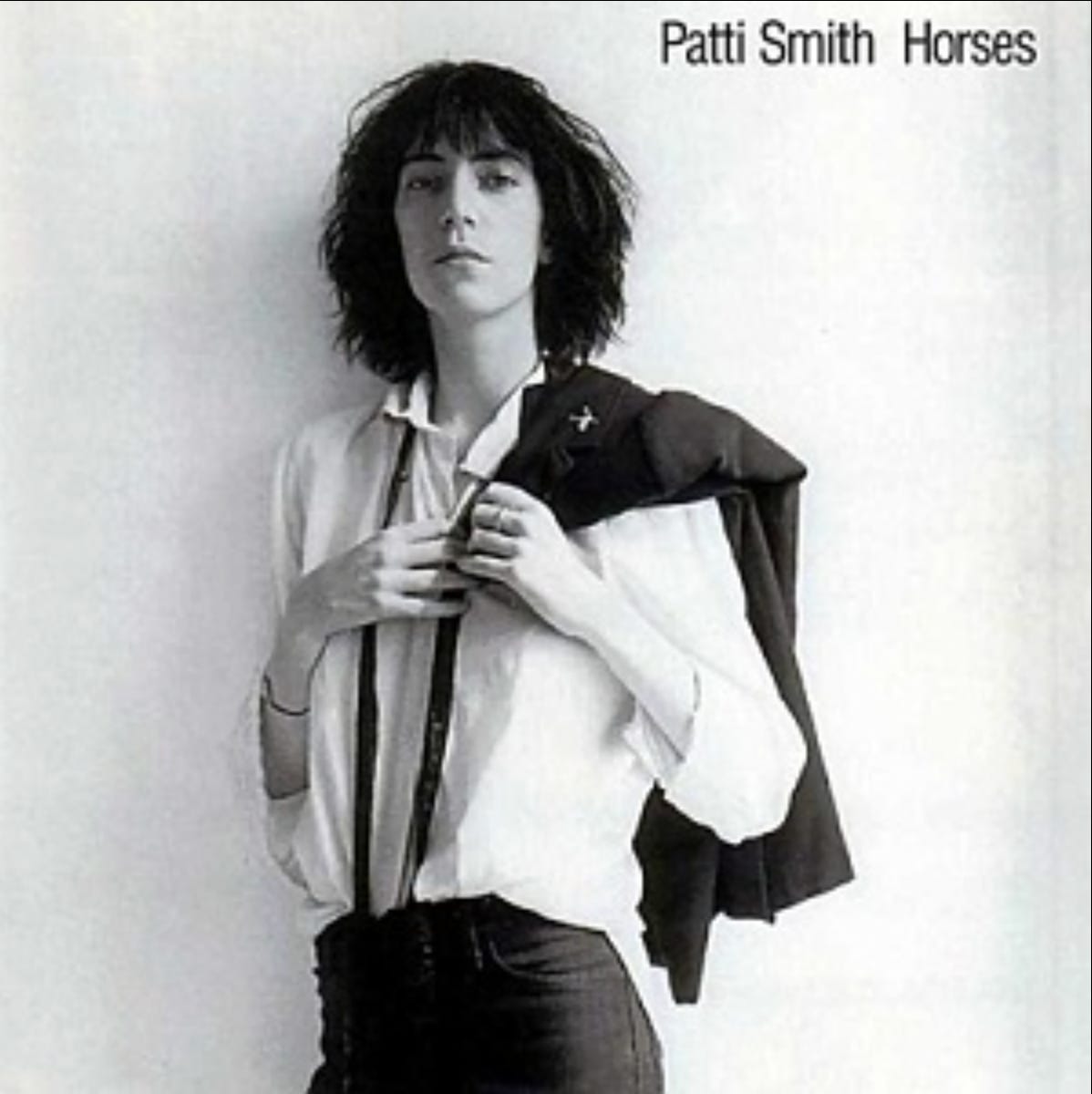
PS. Robert Mapplethorpe took the picture used on Patti Smith’s debut album (which is punk more in attitude than sound):
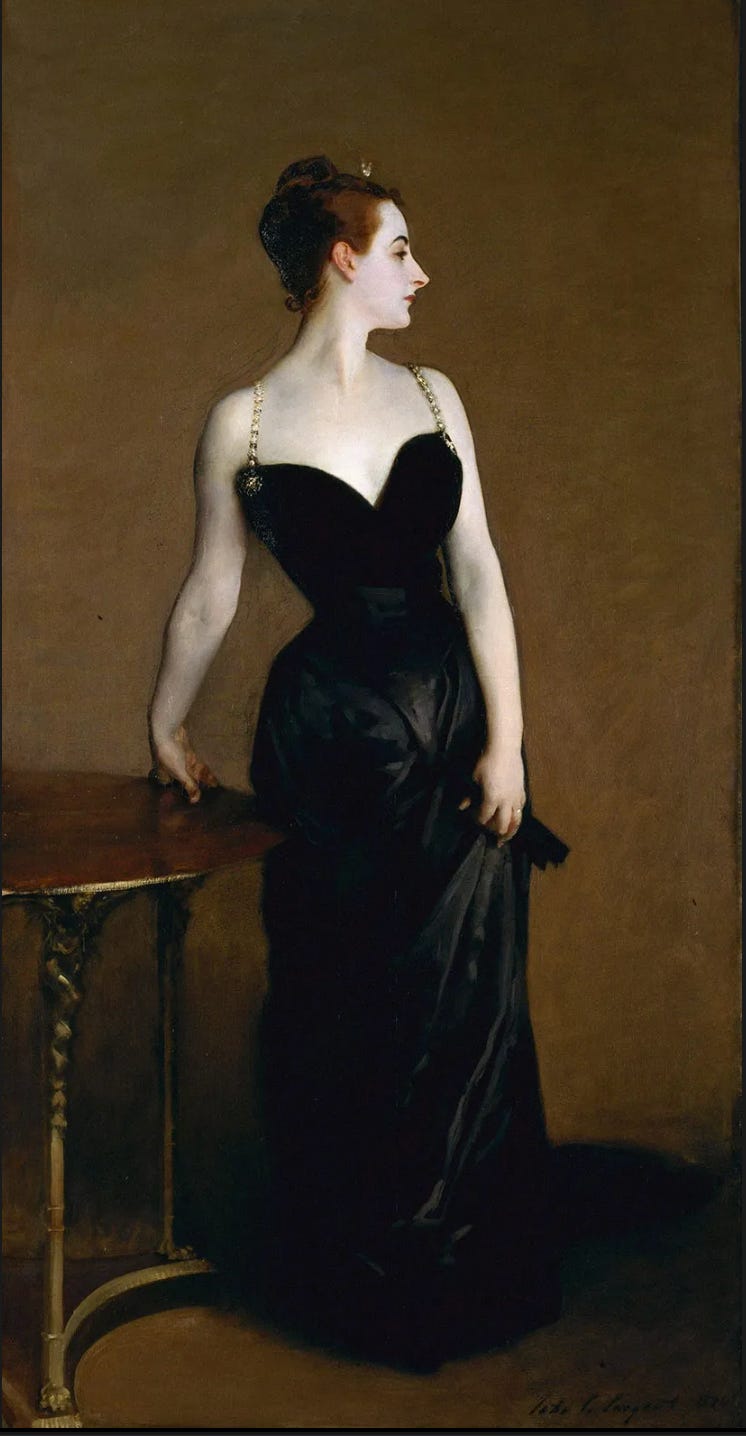
PPS. Is Sargent’s Madame X unapproachable? I’d say her dress welcomes alpha males but her arrogance rebuffs betas.
> at a superficial level our society seems more puritanical than back in the 1970s
If I'm not misunderstanding this, then I disagree. Putting aside whether or not organized religion is on the decline, it's clear to me that that moral relativism or hedonism are not. Austerity, the centrality of the (heteronormative) nuclear family unit, and the value of hard work do seem to be going the way of the dodo, for better or worse.
My only guess is that Scott sees "cancel culture" as a sort of new Puritanism that cancels out those other trends. On some weird corners of the Internet that's definitely true, and surely some of that bleeds into the public square, workplace, etc. But, on the whole, more puritan that 50 years ago? I'm not so sure.
I wasn't alive in the 70s so 100% of my knowledge about it is secondhand, some from family but mostly from media. I'm partially inferring trends from 1-3 decades, which may or may not smoothly extrapolate back that far.
Scott,
I was going to email you recently but I didn’t. I don’t remember what the topic was but I recall feeling as though I didn’t have the time to put together a thoughtful enough analysis to be worth your time.
Back in college I’d go to your office hours and pepper you with questions. When I think about myself back then (13 years ago), I remember how confident I was in whatever I currently believed, and eager to argue it. Now I suppose I have some wisdom, but also perhaps at the cost of higher sensitivity to being corrected.